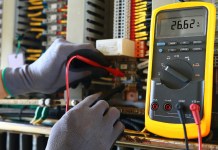

The term lew electrical refers to the professional designation that stands between Singapore’s population and the hazards inherent in electrical systems, a credential born of necessity and refined through decades of regulatory evolution. In a nation where electrical infrastructure powers everything from humble shophouses to towering commercial complexes, the Licensed Electrical Worker emerged not as bureaucratic invention but as essential safeguard. This designation, overseen by the Energy Market Authority, represents the government’s answer to a fundamental question: how does one ensure that those who manipulate the invisible force of electricity possess the competence to do so safely?
The Genesis of Professional Oversight
Singapore’s approach to lew electrical credentialing finds its foundation in the Electricity Act 2001, legislation that codified what common sense had long suggested. The Act speaks with characteristic directness about the role of licensed professionals, establishing that “Under the Electricity Act, LEWs are legally authorised to design, install, test, maintain, repair, inspect, and certify electrical installations.” Here was recognition that electrical work could not be left to chance or good intentions.
The Energy Market Authority assumed responsibility for administering this system, becoming the sole arbiter of who might legally perform electrical work within Singapore’s borders. This centralisation reflected hard lessons learned from electrical accidents past, from fires sparked by faulty wiring, from electrocutions resulting from incompetent repairs. The lew electrical credential thus became the dividing line between authorised competence and illegal improvisation.
The Stratification of Expertise
Understanding lew electrical services requires grasping the hierarchy that governs them. Singapore recognised early that not all electrical work demands equal expertise. A simple socket replacement differs fundamentally from designing the electrical system for a manufacturing facility. Thus emerged three distinct classes of Licensed Electrical Workers, each with carefully delineated boundaries.
The Electrician, designated as Grade 7, occupies the foundation tier. These professionals “can design, repair, install, inspect, operate, test, and maintain for electrical and supply installations that does not exceed 1000 volts and the approved load does not exceed 45kVA.” This scope encompasses most residential work and smaller commercial installations.
Above this stands the Electrical Technician at Grade 8, authorised to handle installations reaching 500 kVA and to design systems up to 150 kVA. At the apex sits the Grade 9 Electrical Engineer, whose purview extends to the most complex industrial and commercial electrical systems. Each progression represents not merely additional training but fundamentally expanded responsibility.
The Mechanics of Verification
For those seeking lew electrical services, Singapore provides mechanisms to verify credentials. The Energy Market Authority maintains the e-Licence Information Services portal, a digital registry where concerned parties can confirm a worker’s authorisation. This system addresses the information asymmetry that long plagued the industry, where homeowners and business operators had no reliable means of distinguishing qualified practitioners from confident charlatans.
Every licensed electrical worker carries physical evidence of their credential: a card bearing their photograph, name, identity card number, and licence number. This tangible proof serves dual purposes, allowing both regulatory authorities and private citizens to verify qualifications at a glance.
The Scope of Professional Responsibility
The lew electrical professional shoulders responsibilities that extend far beyond mere technical competency. “The LEW ensures that the electrical installation under their charge is properly maintained. The LEW also ensures that any electrical work or modification done is done according to code and regulation.” This obligation places licensed workers in the position of guardians, responsible not only for their own work but for ensuring ongoing compliance with safety standards.
Consider the breadth of tasks falling under lew electrical services:
- Design and planning of electrical installations to meet load requirements safely
- Installation of wiring, switchboards, and electrical equipment according to code
- Testing and commissioning of new electrical systems before energisation
- Regular inspection and maintenance of existing installations
- Troubleshooting electrical faults and implementing repairs
- Certification of electrical work for regulatory compliance
- Liaison with authorities for connection to the power grid
Each task carries legal weight. The licensed electrical worker’s signature on compliance certificates represents not perfunctory bureaucracy but legally binding attestation of safety.
The Imperative of Professional Engagement
Singapore law leaves no ambiguity about when lew electrical services become mandatory. The regulations stipulate that “Electrical work, whether at home or the office, should be carried out or supervised by a Licensed Electrical Worker.” This encompasses installation, repair, or modification of electrical wiring, addition or replacement of power points, and repair of control units or circuit breakers.
The requirement reflects recognition that electrical work, however simple it may appear, carries inherent dangers. What seems straightforward to the untrained eye may violate codes that exist for sound reasons, creating hazards that manifest only years later when insulation degrades or connections loosen under thermal stress.
The Broader Context of Public Safety
The lew electrical system exists within Singapore’s larger commitment to public safety. Statistics from the Singapore Civil Defence Force reveal electrical faults as persistent causes of residential and commercial fires. Regular inspections and maintenance by licensed professionals serve not as revenue generation for government coffers but as genuine fire prevention.
The system works because it combines education, testing, and ongoing accountability. Licensed electrical workers must maintain their credentials through continuing education, staying current with evolving codes and technologies. This requirement acknowledges that electrical knowledge, like all technical expertise, requires constant renewal to remain relevant.
In the final analysis, lew electrical services represent Singapore’s pragmatic approach to managing technological risk, ensuring that the invisible force powering modern life remains servant rather than master, illuminator rather than destroyer.