
Key Takeaways
- Traditional training methods often result in passive consumption, weak engagement, and limited learner follow-through.
- Gamified learning focuses on active practice, immediate feedback, and clear progression, which drive higher motivation and retention.
- Interactive learning systems create realistic scenarios, adapt to learner skill levels, and reinforce knowledge through repetition.
- Measuring performance impact (behavior changes, job KPIs) is essential to prove the ROI of gamification in corporate training.
- Alignment with real job tasks, meaningful rewards, and continuous iteration make gamification successful for modern workplaces.
The Limits of Traditional Learning Approaches in the Workplace
Modern learning engagement strategies are practical, evidence-based ways to help people pay attention, practice skills, and remember what they learned—not just “sit through training.” In the workplace, this often means using gamification, interactivity, and strong feedback loops to turn learning into action. That’s why the discussion around gamified learning vs traditional learning matters: one is mostly passive, the other pushes real practice.
In this post, you’ll see how interactive learning systems work, why the effectiveness of gamification in training is often higher, and how to measure real business results like employee learning improvement. Many teams find that shifting from passive content to active practice is the turning point—exactly what gamification of training and development approaches are built to support.
Traditional workplace learning often looks like this:
- Slide decks with lots of text
- Long videos that people watch while multitasking
- PDFs and policies people skim once
- A final quiz that checks memory, not performance
These methods can share information, but they struggle to build real skill.
1) Low attention and weak persistence
When training feels like something to “get through,” learners often:
- Switch tabs
- Half-listen during meetings
- Rush to the final quiz
- Forget most of it within days
This is the opposite of what modern learning engagement strategies aim for. Modern strategies focus on attention and follow-through.
2) Limited practice (so skills don’t stick)
Traditional training often explains what to do, but doesn’t give enough chances to:
- Try the task
- Make decisions under pressure
- Repeat steps until they become automatic
Without practice, learners may recognize the right answer in a quiz, but fail to apply it at work.
3) Delayed or generic feedback
A common pattern is: “Watch content → take quiz → get a score.”
But a score alone doesn’t tell someone:
- What they did wrong
- Why it was wrong
- What to do next time
Weak feedback allows misunderstandings to stay in place.
4) The transfer gap (training doesn’t change behavior)
The biggest problem is the transfer gap: people “complete training” but performance doesn’t improve. Traditional approaches optimize for content coverage. Modern learning engagement strategies optimize for competence—meaning people can perform the skill on the job.
Traditional training also lacks what truly drives learning today: interactive learning systems that respond to what the learner does, not just what they click.
Gamified Learning vs Traditional Learning: Key Differences
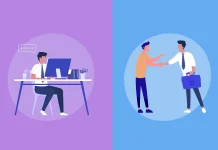
When we compare gamified learning vs traditional learning, the difference is not “fun vs serious.” The real difference is passive exposure vs active skill-building.
Here’s a clear comparison:
- Learner role
- Traditional: passive consumer (read, watch, listen)
- Gamified: active decision-maker (choose, act, solve)
- Skill-building
- Traditional: one-and-done exposure
- Gamified: repeated practice and mastery loops
- Feedback
- Traditional: end-of-module quiz feedback
- Gamified: frequent, in-the-moment feedback
- Progress visibility
- Traditional: unclear progress (“Am I doing well?”)
- Gamified: structured progression (levels, quests, progress maps)
- Motivation and accountability
- Traditional: “required training”
- Gamified: autonomy, purpose, and social support
Gamification is one part of modern learning engagement strategies because it makes learning feel like doing the job, not reading about the job. If you want a deeper breakdown of the terms (and when each approach makes sense), see gamification vs game-based learning.
Why the Effectiveness of Gamification in Training Is Higher
(Effectiveness of gamification in training): the mechanisms that make it work
The effectiveness of gamification in training is higher when it’s designed to improve practice frequency, feedback quality, and persistence—not when it’s just points on top of a slideshow.
Below are the key reasons it tends to outperform traditional formats.
Attention, Motivation, and Voluntary Participation
Gamified systems earn attention by making effort feel worth it. They do this with:
- Clear goals (what you’re trying to achieve)
- Meaningful challenges (what you must do to prove it)
- Visible progress (how close you are)
This supports modern learning engagement strategies because learners feel a sense of control and purpose. They can see what they’re doing, why it matters, and what “good” looks like. If you want the psychological foundations behind this (and why “play” improves learning), explore the psychology behind gamification.
Design warning: motivation can backfire if mechanics feel forced or manipulative. If learners feel “pushed” by fake rewards, they disengage. Voluntary participation rises when goals feel real and relevant, like “handle an angry customer safely” or “spot a phishing email before it spreads.”
Active Learning and Practice-Based Mastery
This is where interactive learning systems shine.
Gamification naturally supports:
- Retrieval practice (recalling knowledge from memory)
- Application (using knowledge in a scenario)
- Repetition (trying again until performance improves)
Instead of asking, “Do you remember this rule?” a good gamified flow asks, “Can you apply this rule in a realistic decision?”
Practice-based mastery looks like:
- Branching scenarios (choose a response, see what happens)
- Procedure drills (repeat steps until accurate)
- Timed decisions (build speed and confidence)
The key is not the “game look.” The key is the learning loop: attempt → feedback → retry → improve. For concrete ways to structure decision-based practice, you can review scenario-based learning games for better decision-making at work.
Immediate Feedback and Reinforcement
Feedback is one of the strongest drivers of learning—if it’s timely and specific.
In many traditional formats, feedback comes late (after a quiz) and is vague (“incorrect”). But stronger feedback looks like:
- “You missed step 3: verify the lockout tag before starting the repair.”
- “That wording escalates the customer. Try an empathy statement first.”
- “This email has two phishing signs: urgent language and a mismatched domain.”
This is a major reason the effectiveness of gamification in training rises: feedback is built into the action, not bolted on at the end.
Rule of thumb: the closer feedback is to the moment of decision, the easier it is for learners to correct the mental model they’re using.
Progression Systems that Encourage Completion
Many learners quit traditional training because they can’t feel progress. Gamified systems reduce that uncertainty with:
- Short missions instead of long modules
- Clear milestones
- Progress maps that show “what’s next”
- Levels tied to skill, not time spent
This supports modern learning engagement strategies because completion becomes the result of good design, not pressure from management.
To keep progression meaningful, connect it to competencies, such as:
- “Level 2: can complete the safety checklist with 100% accuracy”
- “Level 3: can handle 3 common objections with the right steps”
- “Mastery: can spot advanced phishing attempts consistently”
Social Learning and Healthy Competition
Social design can lift performance when it’s fair and supportive. Options include:
- Team missions (shared goals)
- Peer coaching (learners help learners)
- Recognition for contribution (not just speed)
- Light competition with guardrails
Used well, social features drive employee learning improvement because they:
- Normalize practice (“everyone is working on it”)
- Encourage persistence (team accountability)
- Reward knowledge sharing (mentoring, tips, best practices)
Caution: over-competition can hurt. If only the top 5 learners get recognition, everyone else may stop trying. Healthier patterns include team-based play, tiered leaderboards, or “personal best” progress. For practical patterns to get this balance right, see how to balance competition and collaboration in gamified corporate learning.
What Makes Interactive Learning Systems Work
Interactive learning systems: the design principles that matter
Not all “interactive” training is truly interactive. Clicking “Next” is not interactivity. Real interactive learning systems respond to learner choices and performance.
To make interactivity work, focus on these design rules.
Clear Objectives and Well-Designed Challenges
Every challenge should map to a real job task. If the goal is vague, learners will optimize for the wrong thing.
Strong objectives sound like:
- “De-escalate a frustrated customer in 3 steps.”
- “Identify hazards before starting a task.”
- “Choose the correct compliance action in a gray-area situation.”
Weak objectives sound like:
- “Complete the module.”
- “Earn points.”
- “Get 80% on the quiz.”
Points-only systems often fail because they reward activity, not competence. A better approach is to build challenges where success requires the correct behavior, not just clicking fast.
If you want a reference point for how scenario-driven practice is typically structured, game-based learning and gamification solutions often focus on aligning challenges to the tasks people actually do at work.
Personalization and Adaptive Difficulty
One big reason traditional training underperforms is that it treats everyone the same.
But people vary by:
- Role (sales vs support vs operations)
- Experience (new hire vs tenured)
- Skill level (beginner vs advanced)
Adaptive difficulty is a modern learning engagement strategy that keeps learners in the “optimal challenge zone”:
- Too easy → boredom → skipping
- Too hard → frustration → quitting
- Just right → focus → growth
Practical ways to personalize:
- Role-based paths (missions tailored to job tasks)
- “Test-out” options (skip what you’ve mastered)
- Extra drills for weak areas (targeted practice)
- Adaptive hints (help when stuck, fade when improving)
Meaningful Rewards (not just points)
Rewards should signal real progress, not distract from it.
Points and badges can be useful as signals, but they shouldn’t become the goal. Meaningful rewards are tied to capability, such as:
- Unlocking harder scenarios after mastery
- Gaining new tools or responsibilities in the learning path
- Recognition for mentoring others
- Visible “mastery status” tied to performance thresholds
When rewards reflect competence, learners trust the system more—and that trust supports persistence.
Business Outcomes: Employee Learning Improvement Metrics
Employee learning improvement: what to measure (and what “good” looks like)
If training doesn’t change outcomes, it’s just activity. To prove value, connect engagement to performance.
Here are the most useful employee learning improvement metrics.
Completion Rates, Time-to-Competency, Retention
Start with baseline learning metrics, but make them meaningful:
- Completion rate by cohort/role
Helps you see if training is designed for real humans, not ideal learners. - Drop-off points
Where do people quit? A specific mission? A confusing scenario? A difficulty spike? - Time-to-competency
How long until learners hit a defined mastery threshold (not “finished module,” but “can do the task”)? - Retention over time
Use spaced reinforcement:- Weekly missions
- Short refresh challenges
- Scenario replays with new twists
Gamified systems are especially strong here because they make ongoing practice feel normal, not annoying.
Performance Impact and Behavioral KPIs
Ultimately, the business cares about job results. Pick KPIs that match the training goal:
- Quality and error rates (rework, audits, defect counts)
- Safety outcomes (incidents, near-misses, checklist compliance)
- Customer metrics (satisfaction, first-contact resolution, complaint rates)
- Compliance results (violations, reporting accuracy, investigation findings)
- Sales behaviors (discovery questions, conversions, objection handling success)
To show the effectiveness of gamification in training clearly:
- Establish a baseline
- Run a pilot (ideally with a comparison group or staggered rollout)
- Measure behavior and KPI change
- Iterate based on what the data says
This keeps the conversation grounded in outcomes, not opinions. If you want a focused framework for tracking impact, key metrics for gamification success in corporate training can help you choose what to measure and how.
Examples of Gamified Training Programs (common enterprise scenarios)
Gamified training programs work best when the job requires decisions, repetition, and fast feedback. Below are common scenarios where gamified learning vs traditional learning is especially clear.
1) Compliance training with scenario-based dilemmas
Instead of memorizing rules, learners face realistic situations:
- Conflicts of interest
- Data handling choices
- Reporting steps under pressure
The system can show consequences, offer coaching, and let learners retry.
2) Sales and customer service conversation simulations
Learners practice:
- Discovery questions
- Objection handling
- Empathy statements
- Product matching
A strong approach is a branching conversation where each choice changes the outcome.
3) Safety and operations procedure drills
Gamified training programs can build automaticity by repeating:
- Safety checks
- Lockout/tagout steps
- Equipment startup/shutdown routines
- Hazard identification
Learners can fail safely, learn quickly, and try again.
4) Cybersecurity phishing-spotting challenges
Instead of “watch this video,” learners practice with:
- Realistic emails
- Timed decisions
- Increasing difficulty over time
- Feedback explaining the red flags
This is exactly the kind of repeated practice traditional learning struggles to deliver.
5) Onboarding with role-based missions
New hires often feel overwhelmed by information. Gamified onboarding can guide them through:
- Role-specific missions
- Tool and process unlocks after mastery
- Quick practice tasks that mirror real work
This reduces ramp-up time and supports employee learning improvement early—when it matters most.
How to Implement Gamification Successfully
Implementation is where many teams struggle, not because gamification “doesn’t work,” but because they gamify the wrong thing.
Use this practical process to turn modern learning engagement strategies into results.
Choose the right use case
Pick a problem where practice and feedback will actually change outcomes.
Best starting points:
- High-frequency tasks (done daily/weekly)
- High-risk tasks (safety, compliance, security)
- High-cost mistakes (quality issues, customer churn)
- Long ramp-up roles (time-to-competency is a pain)
If the content is low-stakes information, you may not need full gamification. Microlearning plus retrieval checks may be enough.
Design, iterate, and test
Treat it like a product, not a one-time course.
Build a small prototype that tests:
- Is the challenge clear?
- Is the difficulty curve fair?
- Is feedback actionable?
- Do learners want to retry and improve?
Then iterate fast. Don’t spend months building a huge experience before you know whether the practice loop works.
If your use case needs a custom simulation or a more immersive environment, partnering with a Unity game development company can help you build interactive experiences that go beyond simple “click-to-continue” modules.
Launch, measure, and optimize
When you launch, measure like a live system:
- Start-to-finish funnel (where people drop)
- Failure hotspots (which objectives cause errors)
- Replay rates (are people practicing?)
- Time spent per challenge (too long can mean confusion)
- Post-training job KPIs (the real proof)
Then optimize:
- Adjust difficulty where learners stall
- Improve feedback where learners repeat mistakes
- Refine rewards so they reflect mastery
- Tune social features to reduce stress and increase support
This is how you continuously improve the effectiveness of gamification in training—by using learner data to make the system smarter over time.
If you want an end-to-end view of how these programs are typically structured, gamification of training and development solutions can be a useful reference for the full workflow from design to measurement.
Conclusion (when to choose gamification and next steps)
Modern learning engagement strategies are no longer optional in workplace training. Passive methods struggle to hold attention, build real skill, or change behavior. Gamified systems often perform better because they turn training into active practice, supported by feedback, progression, and (when appropriate) social learning.
Use gamification when:
- People must make decisions, not just remember facts
- Mistakes are costly
- Practice and repetition lead to better performance
- You need measurable employee learning improvement
Next steps you can take this week:
- Identify one training area with a clear performance gap
- Pilot an interactive or gamified approach
- Define success metrics (time-to-competency, retention, and job KPIs)
- Scale only after results are proven
As you explore options, you can review game-based learning and gamification solutions for scenario ideas, revisit gamification of training and development for implementation guidance, and consider a Unity game development company if you need a custom build.
Final Notes & Pitfalls to Avoid (so gamification actually works)
To protect results—and credibility—avoid these common mistakes:
- Points-only gamification
Engagement may spike briefly, but skills don’t improve. - Misaligned incentives
Learners “game” the system for rewards instead of building competence. - Excessive competition
Leaderboards can demotivate most learners. Prefer team goals, tiered rankings, or personal progress. - No measurement plan
Without metrics, you can’t prove ROI or improve the design. - No job-task alignment
“Fun” but irrelevant experiences won’t transfer to the workplace.
The backbone of modern learning engagement strategies is alignment: challenges must match real work, feedback must guide improvement, and analytics must connect learning activity to business outcomes. Done this way, interactive learning systems consistently outperform traditional approaches—and the effectiveness of gamification in training becomes visible in real employee learning improvement, not just higher completion rates.
FAQ
Q: What is the main difference between gamified learning and traditional learning?
A: Traditional methods center on passive exposure—reading slides, watching videos, taking quizzes—while gamified learning emphasizes active skills practice, immediate feedback, and clear progress markers.
Q: Why is gamification more effective in corporate training?
A: It accelerates engagement, promotes active repetition of core tasks, and gives timely feedback. These factors help learners master real job skills faster than passive strategies.
Q: How do we measure employee learning improvement with gamification?
A: Track meaningful KPIs like time-to-competency, error rates, job performance changes, and completion metrics. Monitoring these helps you see how learning behavior translates to workplace improvements.
Q: What are interactive learning systems?
A: They are systems that adapt to each learner’s decisions and performance, providing branching scenarios, adaptive difficulty, and targeted feedback, rather than simple click-based interactions.
Q: How can we implement gamification successfully?
A: Start with a relevant use case where better practice matters, build a pilot with clear goals and meaningful feedback, measure results, and iterate continuously based on data-driven insights.